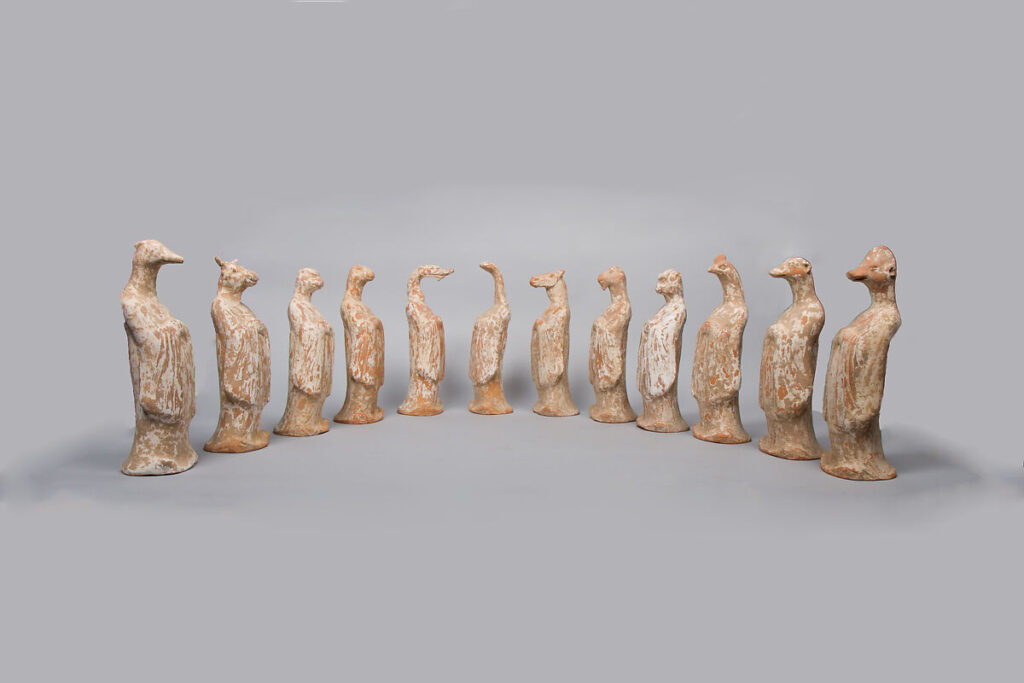
This week we covered the tombs of early China, and the items left behind in them. Figurines and architectural models were left in tombs to provide comfort to the deceased and maintain the status one held while living in the afterlife.
Prior to this class I had heard about the terra cotta army, as I’m sure many others have as well. The army is striking to anyone viewing it proving that the purpose of the army’s creation was to display the power of the first emperor of China, and instill fear of this military power. Tombs were a sign of power in the afterlife and what is a better way to display the eternal power you hold than having a terra cotta army throughout your tomb?
In “ Miniature Tomb Figurines and Models in Pre-Imperial and Early Imperial China: Origins, Development and Significance” by Armin Selbitschka, the development of the items included in tombs was discussed. I found this practice to be very interesting, the mini sculptures/ figurines included in each tomb were created to serve the individual in the afterlife. The figures were not meant to be used by the living, instead they were meant to display the life luxuries that the individual held while living surrounding the tomb with the familiar.
In class on Tuesday while exploring possible topics for my final project I came across figurines of the 12 signs of the Chinese zodiac that were used in tombs as offerings. The figures are interesting because they were clothed in robes, each standing upright. The figures at first to me looked like humans due to the way they are dressed and the way they stand. I would be interested to know what role these figures played in the burial of individuals, why were these figures made and what significance did they hold to the individual in their burial?
Ledderose, Lothar. Ten Thousand Things : Module and Mass Production in Chinese Art. The A.W. Mellon Lectures in the Fine Arts, 1998. Princeton, NJ: Princeton University Press, 2000.
Selbitschka, Armin. “Miniature Tomb Figurines and Models in Pre-Imperial and Early Imperial China: Origins, Development and Significance.” World Archaeology 47, no. 1 (2015): 20-44.

Leave a Reply